Science & Nature
Encroaching Carp, Barrier Delays Threaten Great Lakes Ecosystem
Swimming upstream can be slow going, but carp are playing the long game.
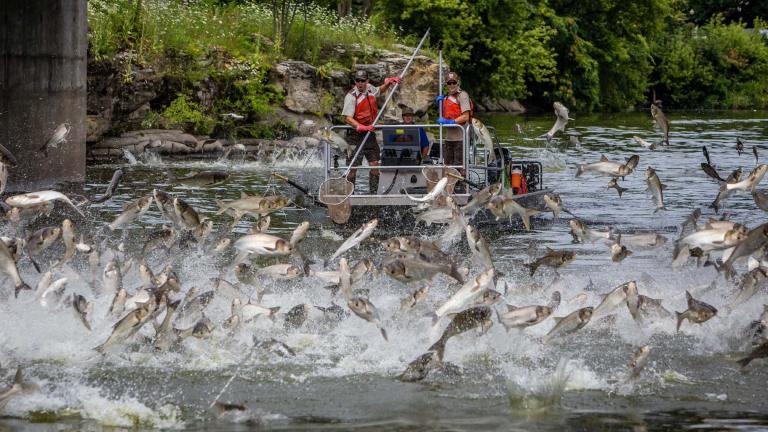
For decades, four species of invasive carp have been working their way toward the Great Lakes. On their way, they’ve left a trail of decimated native fish populations and injured boaters.
If the carp make it into Lake Michigan, they’ll likely find wide open waters, diverse habitats to fill, plenty of food and a conspicuous lack of natural predators.
What started as a faraway threat, slowly creeping up the Mississippi River, is now demanding urgent attention. Just last weekend, monitoring crews with the Illinois Department of Natural Resources found hundreds of young silver carp in the Marseilles Pool, just 80 miles away from Lake Michigan.
Meanwhile, the proposed solution — a barrier along the Illinois River — is stalled amid a rare political feud over what has historically been a point of bipartisan agreement.
“(The carp) are just really great at what they do, which is eating and reproducing,” said Katie O’Reilly, an invasive species specialist at the Illinois-Indiana Sea Grant. “That could lead to the collapse of the fishery in the Great Lakes, which is about a $5 billion fishery.”
Existential threats to the Great Lakes ecosystem are not new. Sea lampreys nearly wiped out the trout population in the 1960s, while zebra and quagga mussels are straining the food chain today.
But with invasive carp, experts say there’s still a small window of time to nip the problem in the bud.
Building the Barrier
Stakeholders around the region have set their hopes on a proposed barrier in southwest suburban Joliet to hold the line against invading carp.
Although construction was already underway on the Brandon Road Interbasin Project, the U.S. Army Corps of Engineers issued a stop-work order on the project in late July.
The project has had bipartisan support for almost a decade, according to Joel Brammeirer, the president and CEO of Alliance for the Great Lakes. But as of now, very little explanation has been given as to why the project is paused.
“Construction crews are ready to start installing technologies into the channel in front of the Brandon Road Lock and Dam and take the next step on the project. And that’s not happening,” Brammeirer said.
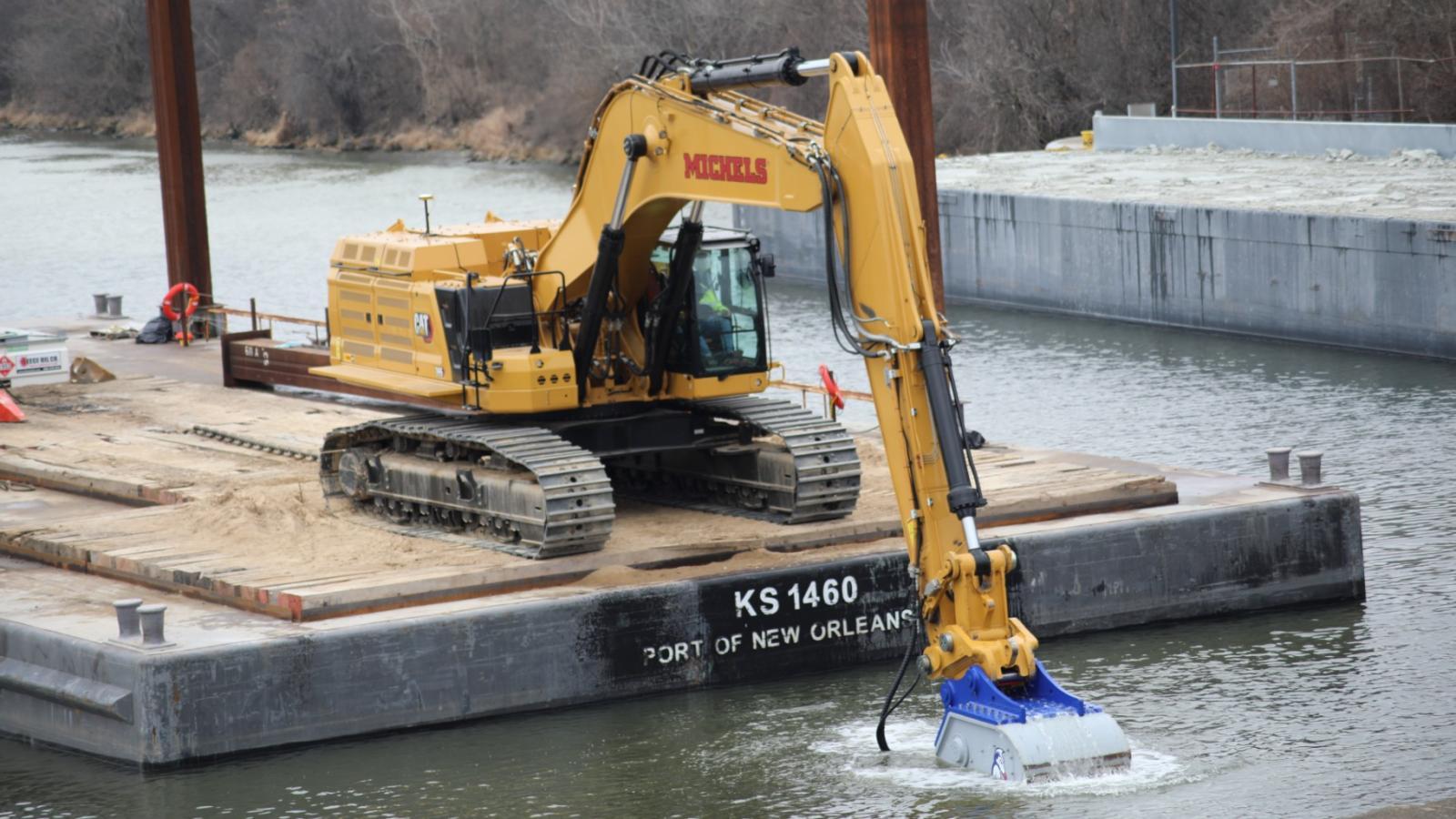
Contractors used an underwater jackhammer called an “Xcentric Ripper” to break up and remove bedrock from within the river channel below the Brandon Road Lock to make way for the engineered channel for the Brandon Road Interbasin Project. (U.S. Army Corps of Engineers)
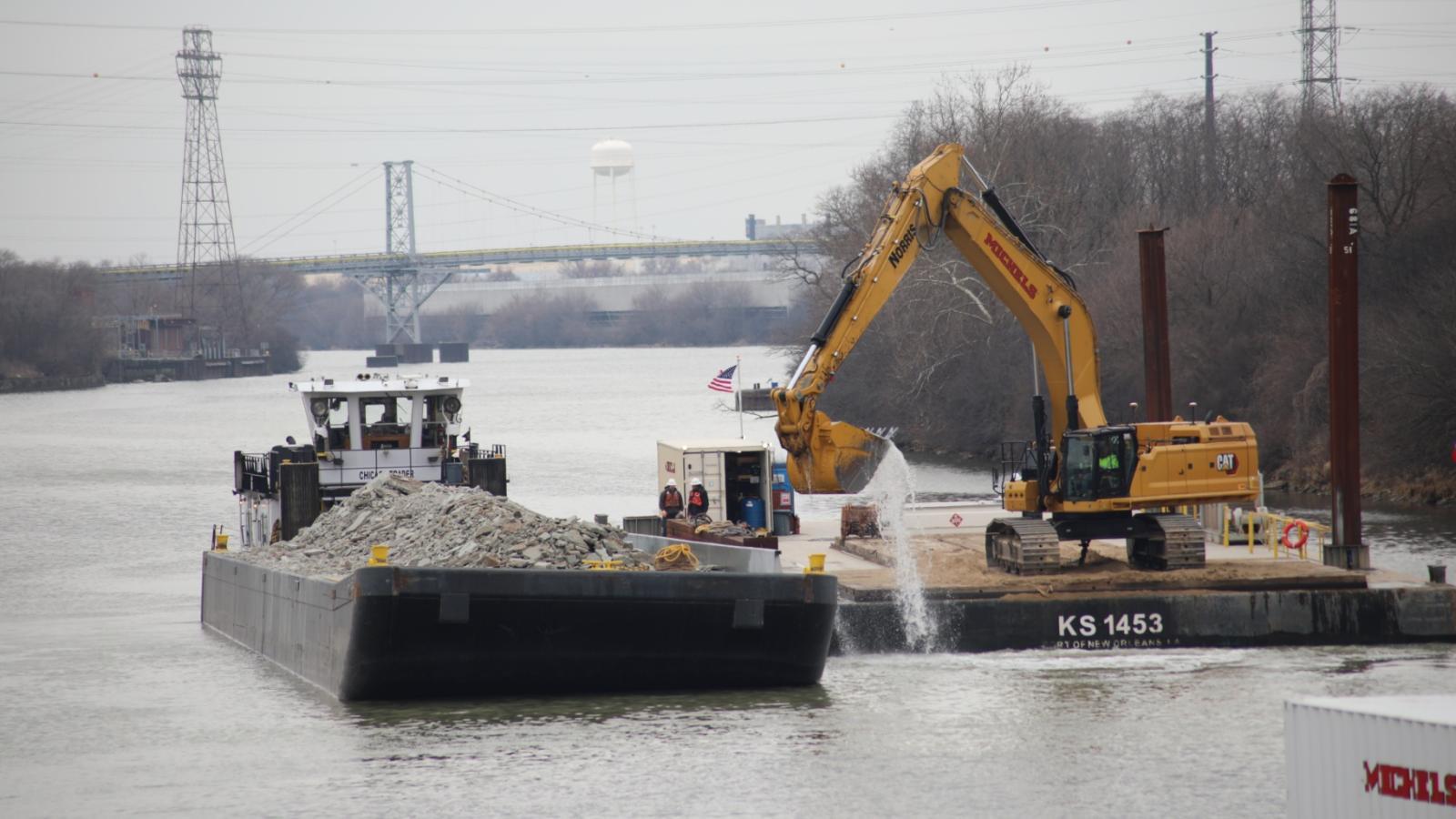
A contractor working on the Brandon Road Interbasin Project uses an excavator on a barge to gather broken bedrock from the bottom of the Illinois Waterway and place it on another barge for removal from the site. (U.S. Army Corps of Engineers)
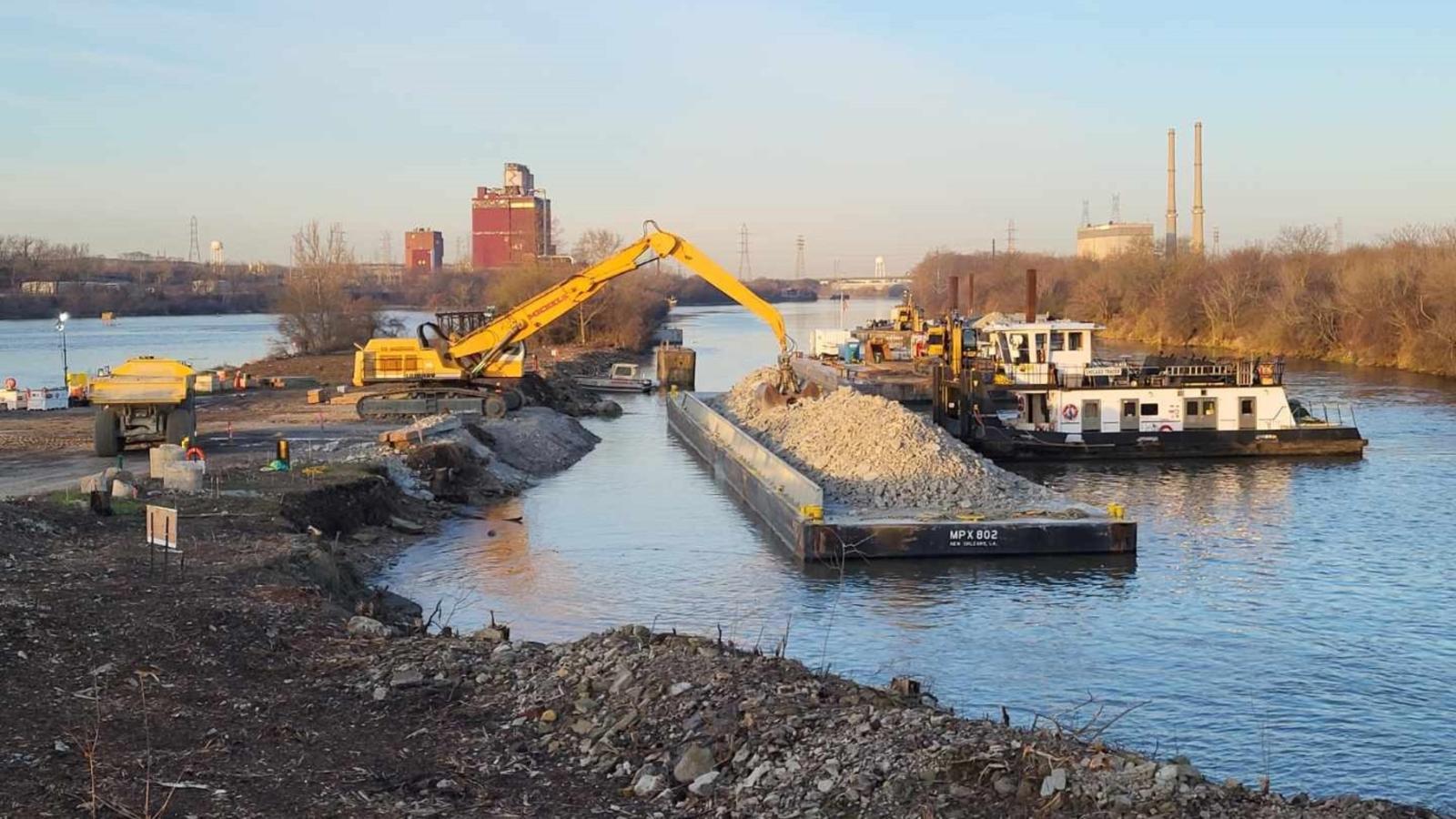
Rock which has been excavated from the river channel for construction of the Brandon Road Interbasin Project near Joliet, Illinois, is unloaded from a barge and placed into trucks for use in another area of the project. (U.S. Army Corps of Engineers)
In addition to money appropriated by Congress, Michigan and Illinois have both chipped in to fund the $1.1 billion project.
“What we’ve got in front of us is the opportunity to see a problem coming, and actually stop it before it gets here,” Brammeier said.
Earlier this year, oversight of the project was transferred from the Army Corps’ Rock Island district in Illinois, to its Detroit district in Michigan, which Gov. JB Pritzker called a “political stunt.”
“If there’s one place that has the power to actually bring people back to work and start construction up tomorrow, it’s our president and the White House that oversees the Army Corps of Engineers,” Brammeier said.
So what’s in the plan for the barrier, if it materializes?
“The Brandon Road project is actually somewhat of a gauntlet for carp,” O’Reilly said. “It’s a stacked system of multiple different deterrents.”
A wall of bubbles gives fish a visual and tactile cue to turn around. Electric currents and sounds, which carp are particularly sensitive to, can also dissuade fish from swimming further upstream.
“The idea is that by stacking all of these different deterrents, it reduces the possibility that they can get through any one of them,” O’Reilly said. “If it gets through one, it will get stopped by another.”
A Super-Highway to the Great Lakes
The carps’ path to Illinois has been paved with good intentions.
In the 1960s, fisheries in the southeastern United States introduced carp as a way to clear out nuisances from their ponds.
The fix seemed simple. Carp eat everything from algae to snails, so the plan was to import some from Asia, breed them domestically and then turn them loose. But a series of floods helped carp escape their transplanted homes and make it into the Mississippi River.
Then, more than a decade after the introduction of carp, the Clean Water Act passed. In one of the great ironies of conservation history, cleaning up industrial pollution from the nation’s waterways made them habitable for both native and non-native species.
And while the Great Lakes and Mississippi River watersheds have historically been separated, the reversal of the Chicago River at the turn of the 20th-century opened up the door for aquatic species to travel between the two.
“Carp made it into the Mississippi River, which sort of acts as a super-highway,” O’Reilly said. “And since then, we’ve seen them progress northward up through Illinois.”
Time Is Ticking
Last Friday, the Illinois Department of Natural Resources announced that monitoring crews found hundreds of juvenile silver carp in Marseilles during routine monitoring, just 80 miles downstream from Lake Michigan.
“This is a significant step in the invasion process that we haven’t previously observed,” O’Reilly said.
Adult carp have occasionally made their way closer to the lake, but finding juveniles means they’re actively reproducing.
“That means things just get a little bit tougher to control them, if they’ve got this established population,” O’Reilly said.
An encroaching carp population, combined with construction delays on the barrier, might make the situation seem dire. But Brammeier and O’Reilly both agreed that our best option — preventing carp from entering the lakes in the first place — is still on the table.
“This project, as it was originally designed, is worth every penny,” Brammeier said. “Because we know the payoff is a great Great Lakes that everybody can enjoy.”